



Sqordy
Sqordy is a 5x5 word puzzle played everyday. Rows and columns make words and the colour clues and restricted tokens offer strategy.
Sqordy takes the popular word-game format and gives it a fresh spin so that your estimate counts both across and down. The goal is to complete a 5\u00d75 word square, i.e. five words across the rows and five words down the columns. The key is to balance the amount of information you need to communicate with the limited quantity of tokens you have. Each erroneous letter will cost you a token . Each correct letter in the right spot will win you a token . That strategy turns even ordinary words become conscious choices.
Wordplay with Two Directions
Sqordy shows an unfinished 5x5 grid. Choose a square, type a letter, and watch the board generate feedback through its colour system. The clues gradually limit which letters can fit into each spot.
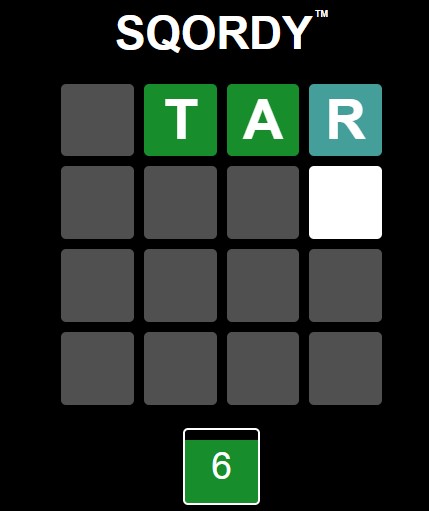
Every incorrect entry costs one token, including guesses based on hints. Correct placements restore one token, resulting in a simple risk-and-reward system that favours deliberate estimates over random ones.
The goal is to make a complete word square, with each row and each column being a valid word. The existing SQORDY puzzles are built around common English words, and the puzzle algorithm looks for the unique answers, not the ambiguous ones.
Why does the day format work?
- Sqordy is a breeze to add to your daily grind, with new problems. The token count goes down, and short sessions can easily become unexpectedly deep word hunts.
- The wording is also meant to be accessible, rather than using obscure jargon. That balance leaves the grid as the main task, spotting patterns, weighing clues, and deciding if there's enough information to make the next guess.
Key Features of Sqordy:
- The aim is to fill a 5×5 crossword grid with meaningful words in all five rows and five columns. Every guess has an effect both ways.
- Colour-coded feedback system: When you select a cell and type in a letter, the board will respond with a colour-coded answer to help you limit down your letter selections.
- Token-based risk-reward mechanism: Players are limited in the number of tokens they have. You lose one token for each incorrect letter (even if you use a clue), and you gain one token for a correct placement.
- Normal English words: This game is not based on obscure principles , thus it uses normal English words . The difficulty is to figure out the pattern and apply some strategy .
- Daily puzzle format: Delivers a short experience easily integrated into a daily routine while retaining the strategic depth as the token supply shrinks.
Tips to Play the Square Effectively
- Careful guesses are important: Players lose tokens on bad guesses and win tokens on good guesses, so they should be wary of random guessing and instead strategise their moves carefully to minimise depletion of their resources.
- Find and cross-reference colour clues: Using the input of the board, go through each location, discarding wrong letters one at a time.
- Spot Grid Patterns: Before you decide where to put the next letter on the board, confirm you have enough information.
Similar Games
- Picsword Puzzles 2 is a word puzzle game that uses pictures with a simple word search format. In this game players are presented with an image that relates to a specific word or phrase.
- Traindle is a quick, reflexive word-chain game. Unlike Wordle, Traindle asks you to link words with logical links such as common themes, common phrases, idioms, or meaningful combinations.
Conclusions
Sqordy is a fun and clever daily word puzzle game that mixes two-way crossword with a complex token management system. Beyond needing a decent vocabulary, every step of the game challenges the player’s caution, discretion and risk management skills. If you enjoy these brain-teasing puzzles, check out quordlewordle.io for a tonne of other fun games.